
10 Biggest Mistakes Car Buyers Make (And How to Avoid Them) | 2026 Guide
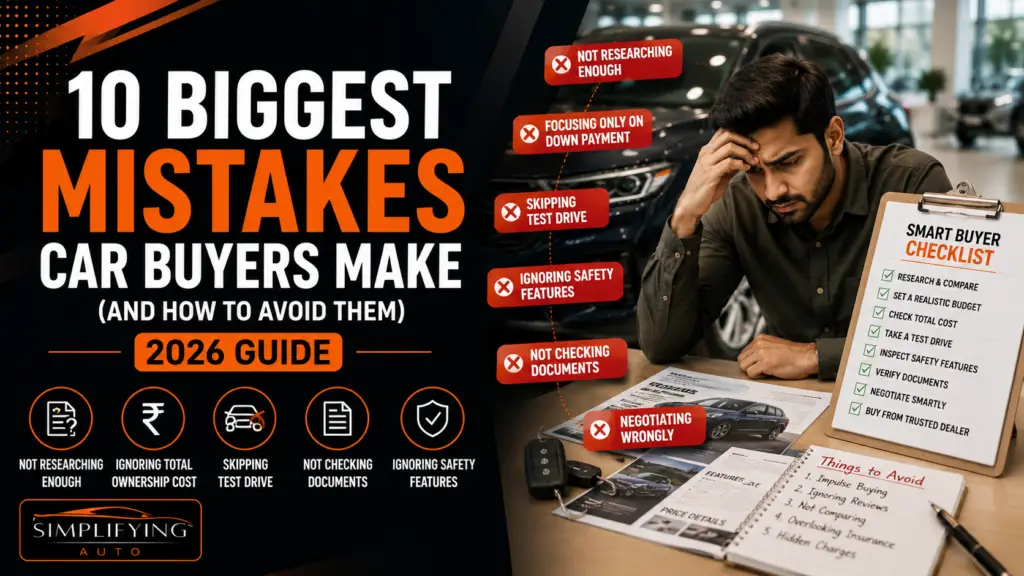
Buying a new car? Avoid these 10 common mistakes that could cost you thousands. Learn how to choose the right car, variant, insurance and more.
Buying a car is one of the biggest financial decisions you’ll make. Yet, many buyers spend months watching YouTube videos, comparing specifications and reading reviews—only to end up choosing the wrong car.
The problem isn’t a lack of information. It’s focusing on the wrong information.
Here are the ten most common mistakes buyers make and how you can avoid them.
1. Buying a Car Based on Trends
One of the biggest mistakes is buying what’s popular instead of what’s practical.
Just because everyone is buying an SUV doesn’t mean it’s the right choice for you.
Similarly, buying an EV because “it’s the future” or a diesel because “it gives better mileage” can backfire if it doesn’t suit your driving pattern.
Always buy a car based on your usage, not social media trends.
2. Choosing the Wrong Fuel Type
Many buyers focus only on fuel efficiency while ignoring their monthly running.
For example:
Buying diesel for 700 km/month rarely makes financial sense.
Buying petrol for 3,000 km/month can significantly increase fuel expenses.
Buying an EV without home charging can become inconvenient.
Choose your fuel type based on your running, driving conditions and ownership plans.
3. Stretching the Budget for the Top Variant
Manufacturers design top variants to look attractive, but they aren’t always the best value.
Many buyers spend ₹1–3 lakh extra for:
Bigger alloy wheels
Panoramic sunroof
Ambient lighting
Cosmetic upgrades
In many cases, the mid-spec variant offers almost everything you actually need.
4. Ignoring Safety Features
A panoramic sunroof doesn’t make a car safer.
Before looking at touchscreens and connected features, check whether the car offers:
Six airbags
Electronic Stability Control (ESC)
TPMS
ISOFIX child seat mounts
Rear camera
Safety features should always take priority over cosmetic features.
5. Watching Reviews Instead of Understanding Your Needs
YouTube reviews are helpful, but they’re designed for a broad audience.
A reviewer may recommend a turbo-petrol sedan because they enjoy spirited driving, while your daily routine involves bumper-to-bumper city traffic.
The same car can be perfect for one buyer and completely unsuitable for another.
Reviews provide information. They don’t replace personalised advice.
6. Accepting the First Dealer Quote
Many buyers assume the first quotation is the final price.
It usually isn’t.
Before booking, compare:
Dealer discounts
Exchange bonuses
Corporate offers
Insurance quotes
Accessory packages
Extended warranty pricing
A little research can save you tens of thousands of rupees.
7. Skipping the Pre-Delivery Inspection (PDI)
Many buyers think a new car doesn’t need inspection.
Unfortunately, transit damage, repainting, battery issues or minor defects can occur before delivery.
A professional PDI helps identify such issues before you accept the vehicle.
It’s a small investment that can prevent major disappointment later.
8. Buying Unnecessary Accessories
Dealerships often recommend large accessory packages during delivery.
While some accessories genuinely improve ownership, many are purely cosmetic.
Prioritise essentials like:
Dashcam
Floor mats
Boot mat
Tyre inflator
Portable vacuum cleaner
Avoid spending heavily on accessories you’ll rarely use.
9. Ignoring Long-Term Ownership Costs
The purchase price is only one part of the equation.
Also consider:
Fuel expenses
Insurance renewals
Annual servicing
Tyre replacement
Depreciation
Spare parts
Resale value
Sometimes, a slightly more expensive car can actually be cheaper to own over the long term.
10. Buying Without Independent Advice
Dealerships naturally recommend their own brand.
Friends recommend the car they own.
Influencers recommend cars based on reviews.
But very few people evaluate your budget, usage, priorities and ownership expectations together.
That’s why independent advice can make such a big difference.
The right recommendation isn’t always the most popular car—it’s the one that best fits your needs.
Final Thoughts
Buying a car shouldn’t feel overwhelming. By avoiding these common mistakes, you can save money, reduce ownership headaches and choose a car you’ll enjoy for years to come.
At Simplifying Auto, we believe every buyer deserves unbiased guidance—not brand-driven recommendations. Whether you’re comparing fuel types, selecting the right variant or deciding between multiple cars, taking an informed approach today can save you from expensive mistakes tomorrow.