
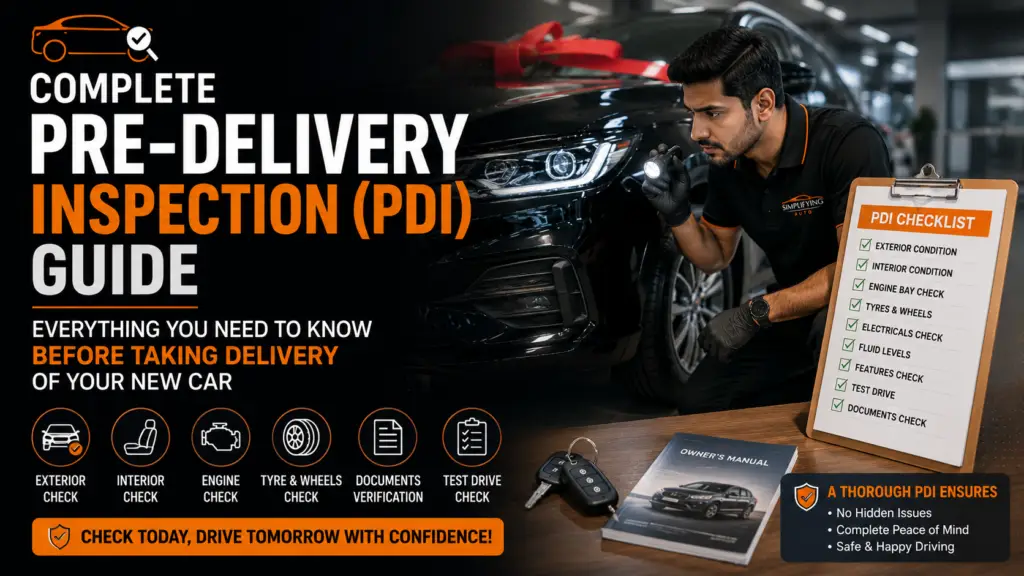
Complete Pre-Delivery Inspection (PDI) Guide: Everything You Need to Know Before Taking Delivery of Your New Car
Confused about car insurance? Learn the difference between comprehensive, third-party, Zero Dep, RTI, Engine Protect, Consumables and other add-ons before buying your new car.
Buying a new car is exciting, but one of the most confusing parts of the process is choosing the right insurance policy.
Many buyers simply accept the insurance offered by the dealership without understanding what’s included, what’s optional, or whether they’re paying for unnecessary add-ons.
The right insurance policy can save you lakhs of rupees during an unfortunate incident, while the wrong one can leave you paying a significant amount out of your own pocket.
This guide simplifies car insurance so you can make an informed decision.
Why Car Insurance Matters
Apart from being a legal requirement in India, car insurance protects you financially against accidents, theft, natural disasters, fire and third-party liabilities.
However, not all insurance policies offer the same level of protection.
Understanding the different types of cover and optional add-ons is essential before finalising your purchase.
Types of Car Insurance
Third-Party Insurance
This is the minimum insurance required by law.
It covers damages caused to another person’s vehicle, property or life if you’re involved in an accident.
What it Covers:
Third-party vehicle damage
Third-party property damage
Bodily injury or death of a third party
What it Doesn’t Cover:
Damage to your own car
Theft
Fire damage
Flood damage
Personal accident repairs
While it’s legally mandatory, third-party insurance alone is rarely sufficient for a new car.
Comprehensive Insurance
This is the policy most new car buyers should consider.
It combines third-party coverage with protection for your own vehicle.
A comprehensive policy generally covers:
Accidents
Theft
Fire
Flood
Cyclone
Earthquake
Vandalism
Natural calamities
For most buyers, comprehensive insurance offers the best balance between protection and peace of mind.
Dealer Insurance vs Outside Insurance
This is one of the most common questions buyers ask.
The answer isn’t always straightforward.
Dealer Insurance
Pros
Convenient
Cashless claims at the dealership
Faster paperwork
Easy during delivery
Cons
Can be more expensive
May include unnecessary add-ons
Limited flexibility
Outside Insurance
Pros
Often more affordable
Multiple insurers to compare
Customisable coverage
Better pricing in many cases
Cons
Requires some research
Claim experience depends on the insurer and workshop
Tip: Always compare at least two or three insurance quotes before making a decision. A higher premium doesn’t always mean better coverage, and the cheapest policy isn’t necessarily the best value.
Essential Insurance Add-ons
Optional add-ons can significantly improve your coverage. Here are the ones worth understanding.
Zero Depreciation Cover
Also known as Zero Dep or Bumper-to-Bumper Cover, this is one of the most valuable add-ons for a new car.
Normally, insurers deduct depreciation on replaced parts during a claim.
With Zero Dep, that deduction is waived, reducing your out-of-pocket expenses.
Recommended for: All new cars, especially during the first 5 years.
Return to Invoice (RTI)
If your car is stolen or declared a total loss, insurers usually compensate you based on the Insured Declared Value (IDV), which reduces every year.
With RTI, the insurer reimburses the original invoice value of the car, subject to policy terms.
Recommended for: New cars, especially those financed through a loan.
Engine Protect Cover
Standard comprehensive insurance may not cover engine damage caused by water ingress or oil leakage.
Engine Protect helps cover such repairs, which can otherwise be extremely expensive.
Recommended for:
Turbocharged cars
Luxury vehicles
Flood-prone cities
Consumables Cover
This add-on covers the cost of items typically excluded during claims, such as:
Engine oil
Coolant
Brake fluid
Nuts and bolts
Grease
While individually inexpensive, these costs can add up during major repairs.
Roadside Assistance (RSA)
Roadside Assistance provides help if your car breaks down due to:
Flat tyre
Dead battery
Mechanical failure
Towing requirements
Fuel shortage
For long-distance travellers, this add-on offers excellent peace of mind.
What is IDV?
IDV (Insured Declared Value) is the maximum amount your insurer will pay if your vehicle is stolen or declared a total loss.
A higher IDV generally means:
Better compensation
Slightly higher premium
Don’t choose an unusually low IDV just to reduce the insurance premium.
Should You Buy Extended Warranty Along with Insurance?
Insurance and extended warranty serve different purposes.
Insurance protects against accidents, theft and external damage.
Extended Warranty covers manufacturing or mechanical failures after the standard warranty expires.
For many modern turbo-petrol, hybrid and premium vehicles, having both can provide greater peace of mind.
Common Mistakes Buyers Make
Avoid these frequent mistakes:
Buying insurance without comparing quotes.
Choosing the cheapest premium without checking coverage.
Ignoring important add-ons like Zero Dep or RTI.
Selecting a very low IDV to save money.
Assuming dealer insurance is always the best option.
Not reading policy exclusions.
A few extra minutes spent understanding your policy can prevent expensive surprises later.
Final Thoughts
Car insurance isn’t just another formality during the buying process—it’s one of the most important financial safeguards for your vehicle.
Instead of focusing only on the premium amount, evaluate the overall coverage, claim support, add-ons and long-term value. A well-chosen policy can make a huge difference when you need it most.
At Simplifying Auto, we help buyers understand dealer insurance quotations, compare coverage and identify unnecessary add-ons during our personalised consultations, ensuring you pay for protection that genuinely adds value.