
New Car vs Used Car: Which One Should You Buy in India? (2026 Guide)
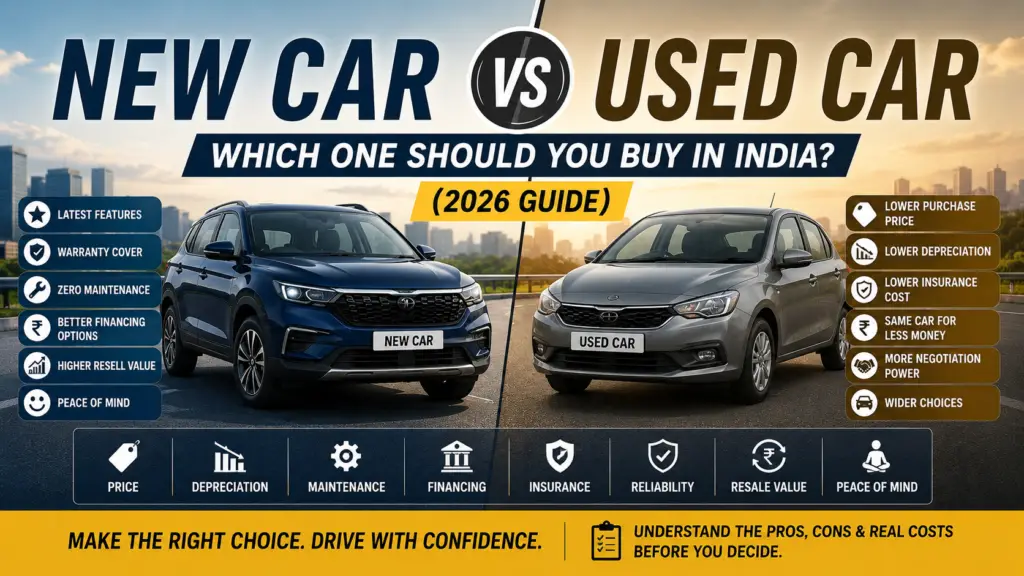
Should you buy a new or used car? Compare costs, depreciation, maintenance, reliability, financing and ownership to make the right decision in India.
If you’re planning to buy a car, one of the first questions you’ll face is:
Should I buy a brand-new car or save money by purchasing a used one?
There isn’t a one-size-fits-all answer. Both options have their own advantages, and the right choice depends on your budget, driving needs, and ownership expectations.
In this guide, we’ll compare new and used cars across every important factor to help you make an informed decision.
When Buying a New Car Makes Sense
A new car offers peace of mind that’s difficult to match.
You’re the first owner, the vehicle comes with a manufacturer warranty, and you know its complete history from day one.
Best For
First-time buyers
Long-term ownership (7–10 years)
Families
Buyers wanting maximum reliability
People planning to finance the vehicle
Advantages of Buying a New Car
Manufacturer Warranty
Most new cars come with a standard warranty of 3–5 years, with options to extend coverage further.
This means fewer repair worries during the initial ownership period.
Latest Features and Safety
New cars offer the latest:
Safety technology
Infotainment systems
Driver assistance features
Improved fuel efficiency
Better emissions compliance
You’re buying the newest version of the product.
Better Financing Options
Banks generally offer:
Lower interest rates
Higher loan eligibility
Longer repayment tenure
for new vehicles compared to used cars.
Complete Ownership History
There are no hidden surprises.
You know exactly:
How the car has been driven
Service history
Accident history
Maintenance schedule
Disadvantages of Buying a New Car
Higher Purchase Cost
The biggest disadvantage is obvious—you pay the highest possible price.
Faster Depreciation
A new car loses the most value during its first few years.
This is often referred to as the depreciation hit, though the exact amount varies by model and market conditions.
When Buying a Used Car Makes Sense
Used cars can offer tremendous value—provided you buy the right vehicle.
Someone else has already absorbed much of the initial depreciation, allowing you to purchase a better segment or higher-spec model within your budget.
Best For
Budget-conscious buyers
Second-car owners
Learners
Short-term ownership
Buyers upgrading from two-wheelers
Advantages of Buying a Used Car
Lower Purchase Price
This is the biggest advantage.
For the same budget, you may be able to buy:
A higher variant
A larger vehicle
A more premium brand
than you could if buying new.
Slower Depreciation
Since the first owner has already absorbed the steepest depreciation, used cars generally lose value at a slower pace.
Lower Insurance Premium
Insurance costs are usually lower because the insured value of the vehicle is lower.
Disadvantages of Buying a Used Car
Unknown Vehicle History
Not every seller is transparent.
Hidden issues may include:
Accident repairs
Flood damage
Odometer tampering
Poor servicing
Multiple previous owners
Higher Maintenance
As vehicles age, wear and tear naturally increases.
Components such as:
Suspension
Clutch
Tyres
Battery
Brake pads
may require replacement sooner.
Limited Warranty
Many used cars are no longer covered under the manufacturer’s standard warranty.
Even certified used vehicles usually have more limited coverage than brand-new cars.
Why Inspection is Critical for Used Cars
Unlike new cars, used vehicles should never be purchased based only on photographs or the seller’s claims.
A professional inspection can reveal:
Accident repairs
Paintwork
Engine health
Fault codes through OBD diagnostics
Suspension issues
Tyre condition
Battery health
Underbody damage
A proper inspection often prevents buyers from making expensive mistakes.
New vs Used: Quick Comparison
Factor New Car Used Car
Purchase Price Higher Lower
Warranty ✔ Full Limited / May not be available
Reliability Excellent Depends on condition
Features Latest Depends on model year
Maintenance Lower initially Can be higher
Financing Easier Slightly costlier
Insurance Higher premium Lower premium
Depreciation Highest initially Slower
Should You Buy a Used Luxury Car?
This is one of the most common questions we receive.
While a pre-owned luxury car may seem like a bargain, remember:
You buy a luxury car once—but you maintain it like a luxury car forever.
Even if the purchase price is attractive, servicing, tyres, suspension components and spare parts can still be expensive.
Always evaluate the long-term ownership costs, not just the purchase price.
Who Should Buy a New Car?
A new car is generally the better choice if:
You plan to keep it for many years.
You value peace of mind.
You want the latest safety features.
You don’t want unexpected repairs.
You qualify for attractive financing offers.
Who Should Buy a Used Car?
A used car can be an excellent choice if:
Your budget is limited.
You’re comfortable with some maintenance.
You’re buying from a trusted seller.
The car has a transparent service history.
It passes a thorough professional inspection.
Final Thoughts
Both new and used cars can be smart purchases—but only when they match your needs and expectations.
A new car offers reliability, warranty and a fresh ownership experience, while a well-maintained used car can deliver exceptional value for money. The key is to evaluate the total cost of ownership rather than focusing only on the purchase price.
At Simplifying Auto, we help buyers compare new and used car options based on their budget, driving habits and long-term plans. If you’re considering a pre-owned vehicle, we also recommend a professional inspection before making any payment, as it can uncover issues that aren’t visible during a regular test drive.